Case study
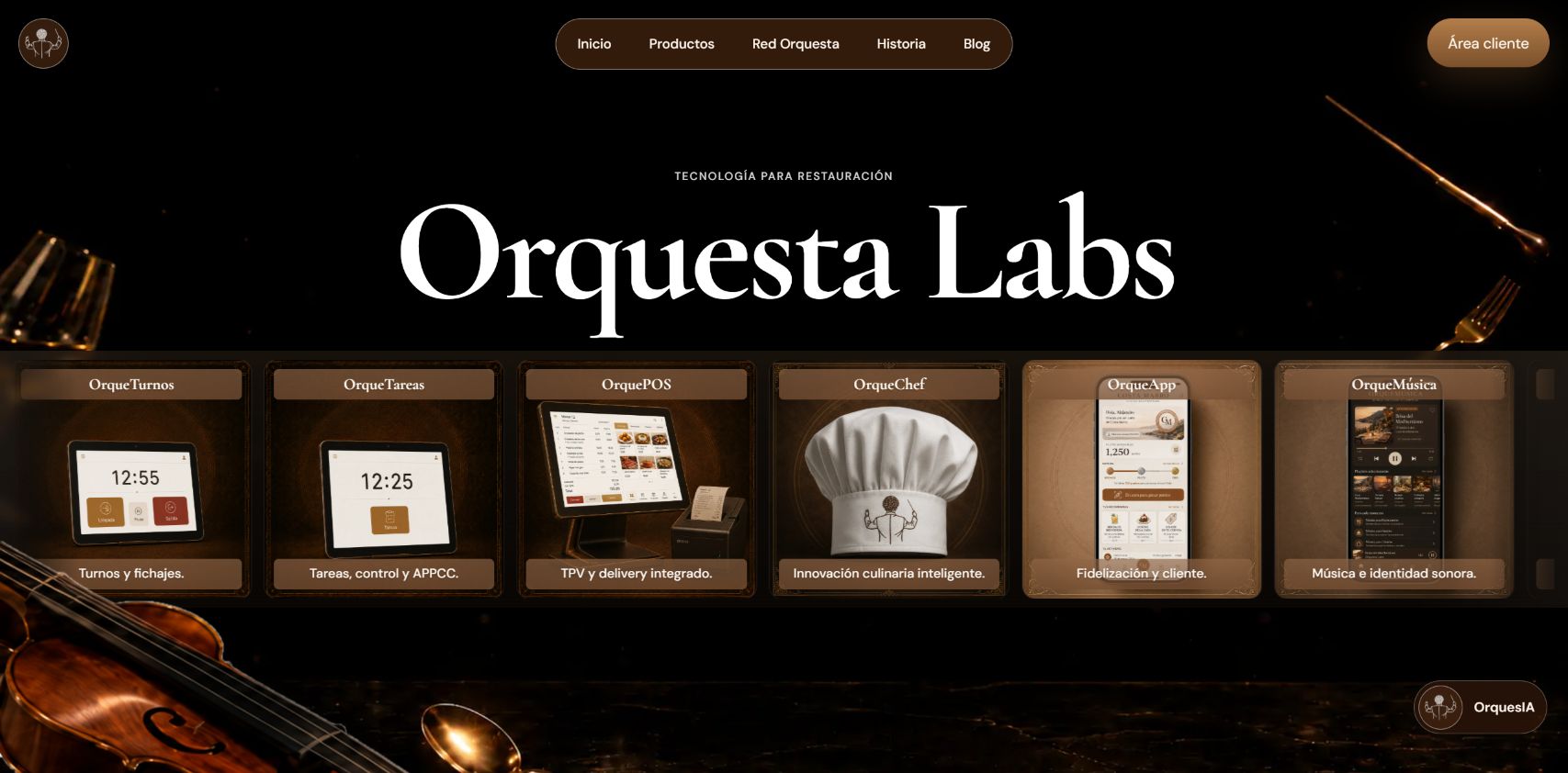
Orquesta Labs: operational software for restaurants
I co-founded Orquesta Labs after several years working in restaurants. I lead product and technology, from deciding which problem deserves a tool to designing the architecture and building it.
The idea starts with something ordinary: during service, nobody has time to fight an interface. The software should respect the floor's pace and help the team without interrupting it.
- Industry
- Hospitality-tech
- Model
- SaaS ecosystem
- Responsibility
- End-to-end product and technology
The daily work behind the product
A restaurant coordinates guests, reservations, staff, tasks and timing while service keeps moving. When tools do not talk to each other, teams fill the gaps with messages, separate sheets and knowledge held by only a few people.
Orquesta Labs begins there. We build modular tools to organize that work without asking a restaurant to change everything at once or bend every process around a rigid system.
Having worked on the other side of the screen
I worked as a waiter at La Piemontesa and La Tagliatella and as a crew member at McDonald's. I experienced demand peaks, shift handovers, late information and the difference a clear process can make.
That experience does not replace user research; it gives me better starting questions. It also helps me spot features that look elegant in a demo but would add steps when the team has the least time.
What I do at Orquesta Labs
I lead product and technology: prioritization, architecture, frontend, backend, APIs, authentication, databases, integrations and deployment. Working across the journey forces me to connect each technical decision to a specific need.
I structure the system in modules so it can grow without mixing responsibilities. In the interface, repeated actions must be fast and predictable because they compete with physical work, noise and guest attention.
- Frontend and product with Next.js, React and TypeScript.
- Backend, APIs and processes with Node.js and NestJS.
- Data and persistence with PostgreSQL and Prisma.
- Infrastructure with Docker, Nginx, PM2, caching and job queues.
AI only when it removes work
AI is useful when it organizes information, finds a priority or removes repetitive work. If the process itself is still unclear, adding a model only hides the problem for a while.
Any recommendation should be reviewable and leave the final decision with the team. In a restaurant it also has to arrive on time: a brilliant answer that comes too late is useless.
A product I am still building
Orquesta Labs lets me combine two experiences that are often kept apart: working in restaurants and building a full-stack product. It is not a weekend prototype, but a product I continue to review and develop.
This page explains my role and the decisions behind the work. The official Orquesta Labs website shows the latest public state of the product.
Sources and verification
Public references used to support the factual claims on this page.